
Haiku, photography, and watercolor.
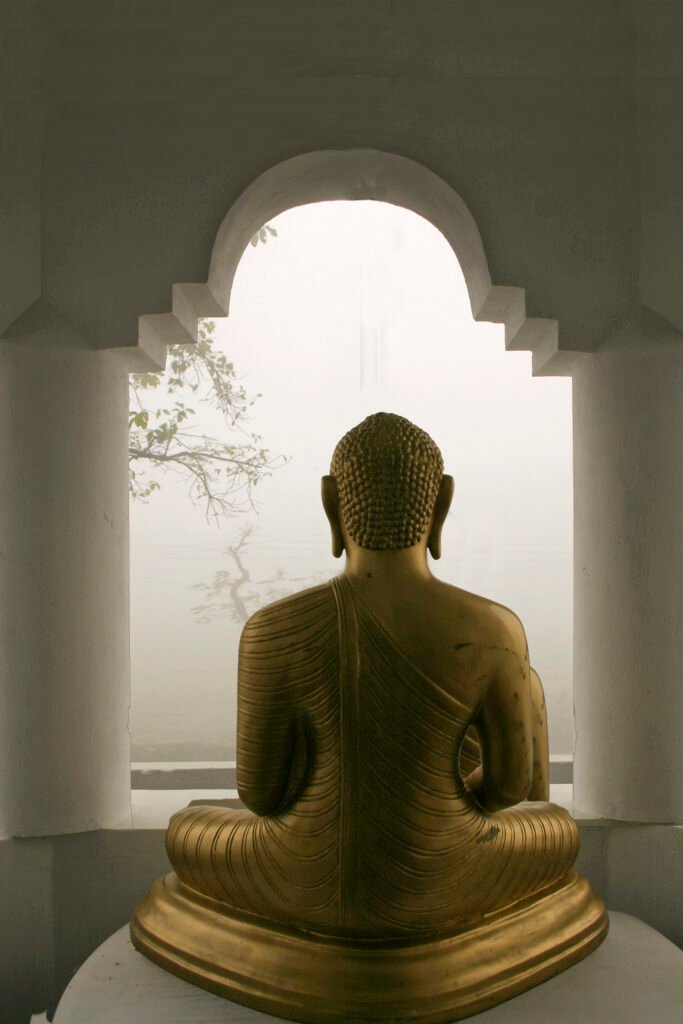
窓をあけると
春風が入る
旅にでる
when I open the window,
the spring breeze enters
it’s time to travel
— Taneda Santōka
Most of our daily lives are spent trying to hold onto things, or rushing past them before we have really seen them.
For the past several years, beside a simple sitting practice, I have been returning to three quiet ways of slowing down: reading and writing haiku, making photographs, and putting watercolor on wet paper. At first glance, they seem like separate pursuits. One uses words, one uses light and a lens, and one uses pigment and water. The longer I have worked with them the more they have begun to feel like the same conversation.
All three depend on restraint. They work by knowing what to leave out.
A haiku holds a single moment in just a few short lines: a shift in weather, the sudden movement of a bird, the chill of early morning air. Rather than counting strict syllables, I let each poem take whatever brief shape the moment needs, leaving plenty of unsaid space around the words to breathe. A photograph works the same way. What matters is the subject inside the frame, the quiet space around it, and passing light that will never fall in quite that way again. Watercolor also refuses to be rushed or overworked. Its life comes from the unpainted white of the paper showing through thin washes of color.
Centuries ago in Japan, the poet Matsuo Bashō brought poetry and brushwork together in an art form called haiga, where image and verse sit beside each other without explaining one another. In the book, most of the poems come from classic Japanese poets, alongside a handful of my own. Haiku is often rooted in kigo, a seasonal word that anchors a brief observation to the turning of the year, like blossoms opening after spring rain or the first frost on winter grass. Whether a poem follows traditional forms or loosens them, the impulse stays the same: noticing life while it is in motion, before it becomes something else.
In my own studio and travels, these pieces arrived unhurriedly. Many of the photographs were taken early in the morning before breakfast, with cold hands while frost still lingered on the ground, or at dusk when the last light was slipping away.The watercolors happened whenever I felt drawn to touch a wet brush to paper and see how the pigment moved.
None of them were made to capture grand spectacles. They came from small, ordinary moments that are easy to miss when the mind is elsewhere, and from the quiet discipline of returning, again and again, to look a little closer.
on the lake a float
morning light, bird shadows
resting in stillness
— James Gritz
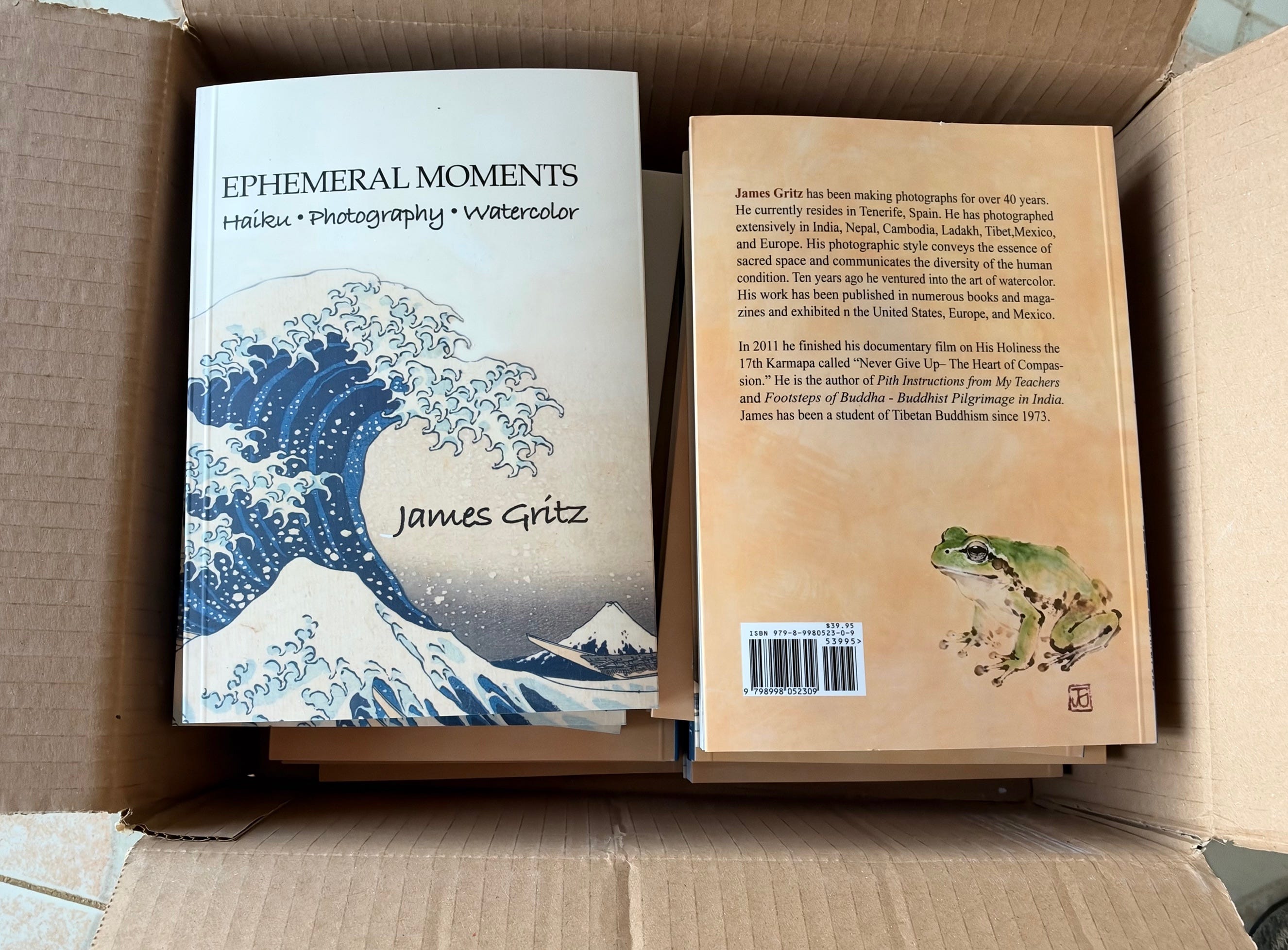
This box just arrived at the studio. Ephemeral Moments: Haiku, Photography, Watercolor (234 pages, Paperback, in English) is now available, with a Spanish edition following later.
If you would like a copy for yourself or as a gift, here is where to find it:
Spain & European Union: Order directly from the printer via Libros.cc (includes free shipping in Spain and 3 to 5 business day printing and delivery).
Signed Copies (Spain & EU): If you would like a signed copy sent directly from this box, email me at [your-email@jamesgritz.com] with the name you would like inscribed and your postal address so I can share the shipping total.
USA, Canada, Mexico & Rest of World: Order via Buscalibre. Select your country at the top of the page and search ISBN 9798998052309 so shipping rates and local currency calculate properly.