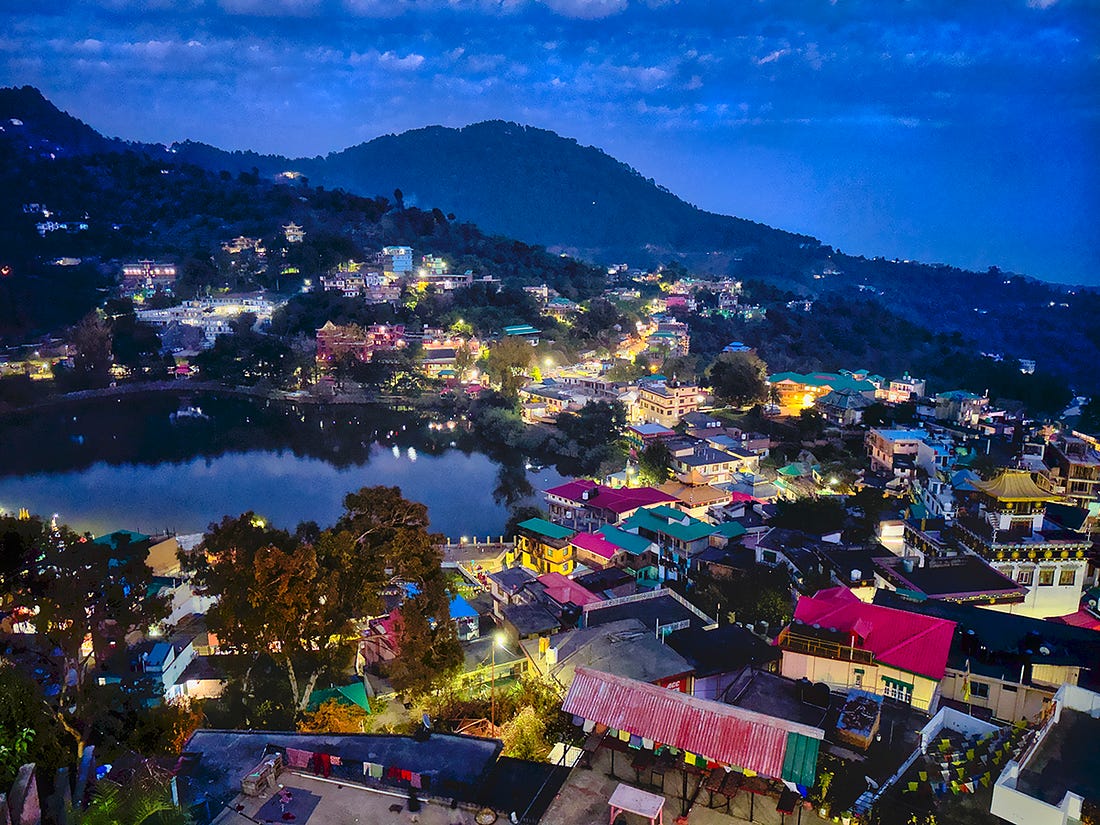
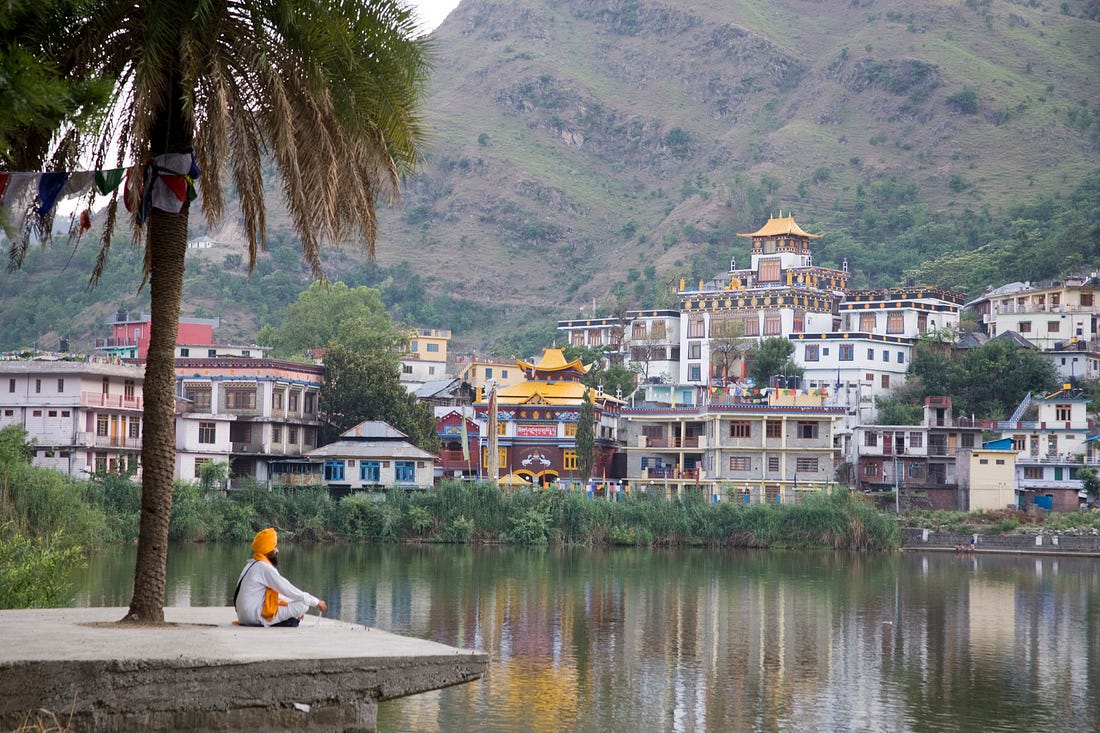
I have made the pilgrimage to Tso Pema, the Lotus Lake of Guru Rinpoche, several times. Tso Pema, as the Tibetans call it, is a small sacred site known as Rewalsar to Indians, located in the Mandi district of Himachal Pradesh in northern India. It is a major pilgrimage hub for Buddhists, Hindus, and Sikhs, with temples often situated side by side. Locally, it is known as Trisangam—the confluence of three faiths.
My first visit was with Dzogchen Ponlop Rinpoche and the Nalandabodhi sangha. We traveled by bus after visiting His Holiness the 17th Karmapa at Gyuto Monastery near Dharamsala, and Palpung Sherabling Monastery, the seat of Tai Situ Rinpoche. We had just received a Red Hat empowerment and a profound teaching by Situ Rinpoche on the nature of mind, so we were ripe for immersion in this sacred Padmasambhava pilgrimage site.
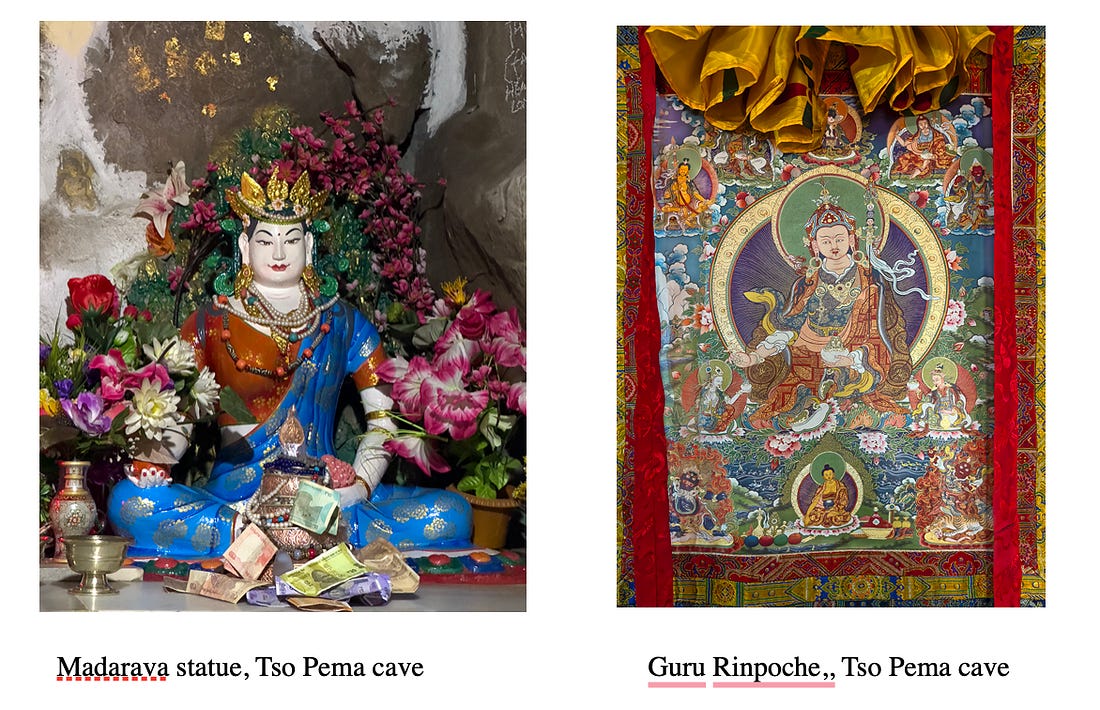
When we arrived and stepped off the buses, Ponlop Rinpoche told us the story of Padmasambhava and the princess Mandarava. According to legend, Guru Rinpoche was giving tantric teachings to Mandarava during a retreat near present-day Tso Pema when she became his consort. When Mandarava’s father, the king of Zahor, found out, he was furious. Padmasambhava and Mandarava were arrested. Mandarava was put in a cell, and the king ordered his servants to burn Guru Rinpoche alive.
They set him on a funeral pyre in the valley. The fire blazed for a full week, covering the sky with black smoke. When the smoke finally cleared, the king’s men returned to see what had happened. They found that the funeral pyre had transformed into a vast lake, and Padmasambhava was seated unharmed upon a giant lotus in the middle of the water. Witnessing this miracle, the king repented and Mandarava was released. She went on to become one of Guru Rinpoche’s principal disciples and consorts.
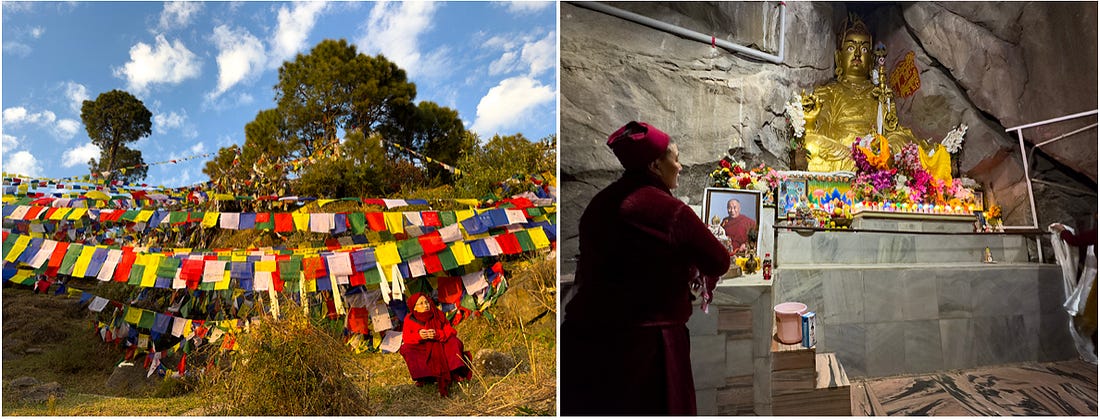
One of the blessings of being on pilgrimage with your teacher is hearing these dharma legends at the holy sites where they occurred, practicing and making offerings in the footsteps of these revered lineage figures.
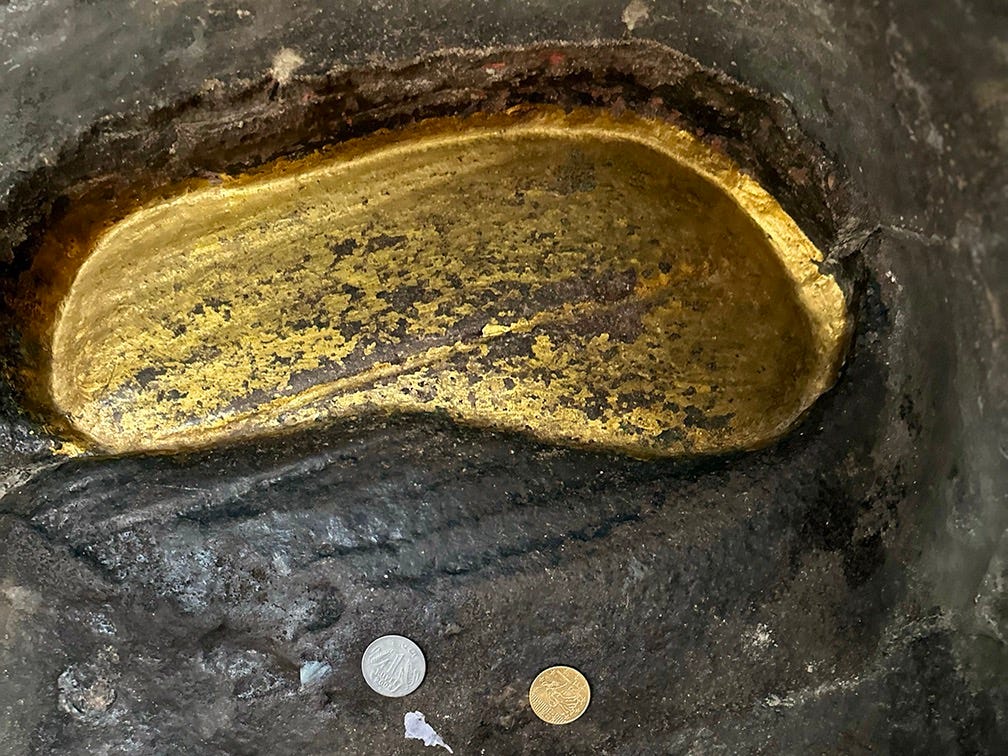
Said to be the footprint of Guru Rinpoche, upper caves, Tso Pema
There have been times I traveled the Buddhist circuit without a teacher and felt a bit lost—wondering, now that I am at this sacred site, what do I do besides take pictures? In this magical play, the teacher is always the director.
We took the path up to the cave above Tso Pema associated with Guru Rinpoche and Mandarava. There we practiced a Guru Rinpoche sadhana, Kunchok Chidu, and had a small tsok (feast offering). Ponlop Rinpoche then gave a brief talk. He said we gather here to practice as Guru Rinpoche and Mandarava did and realize the nature of mind, which is bliss and emptiness — Mahasukha, or Great Bliss, through the Vajrayana path of Dzogchen and Mahamudra. We sat in silence, each making our own aspirations.
The last time I visited Tso Pema was after seven weeks of abhishekas (empowerments) covering the entire Drubthab Kuntu, given by Dzongsar Jamyang Khyentse Rinpoche at the Chökyi Lodrö Institute. The empowerments, reading transmissions, and teachings were completed over forty-nine days. Again, after receiving so many blessings, my mind felt calm and open to this sacred space. This time, I was traveling with two dharma friends from the program.
We covered some of the same ground, including the cave above Tso Pema. Standing there, we looked out at the landscape, the lake below, and a giant Padmasambhava towering above from the mountainside.
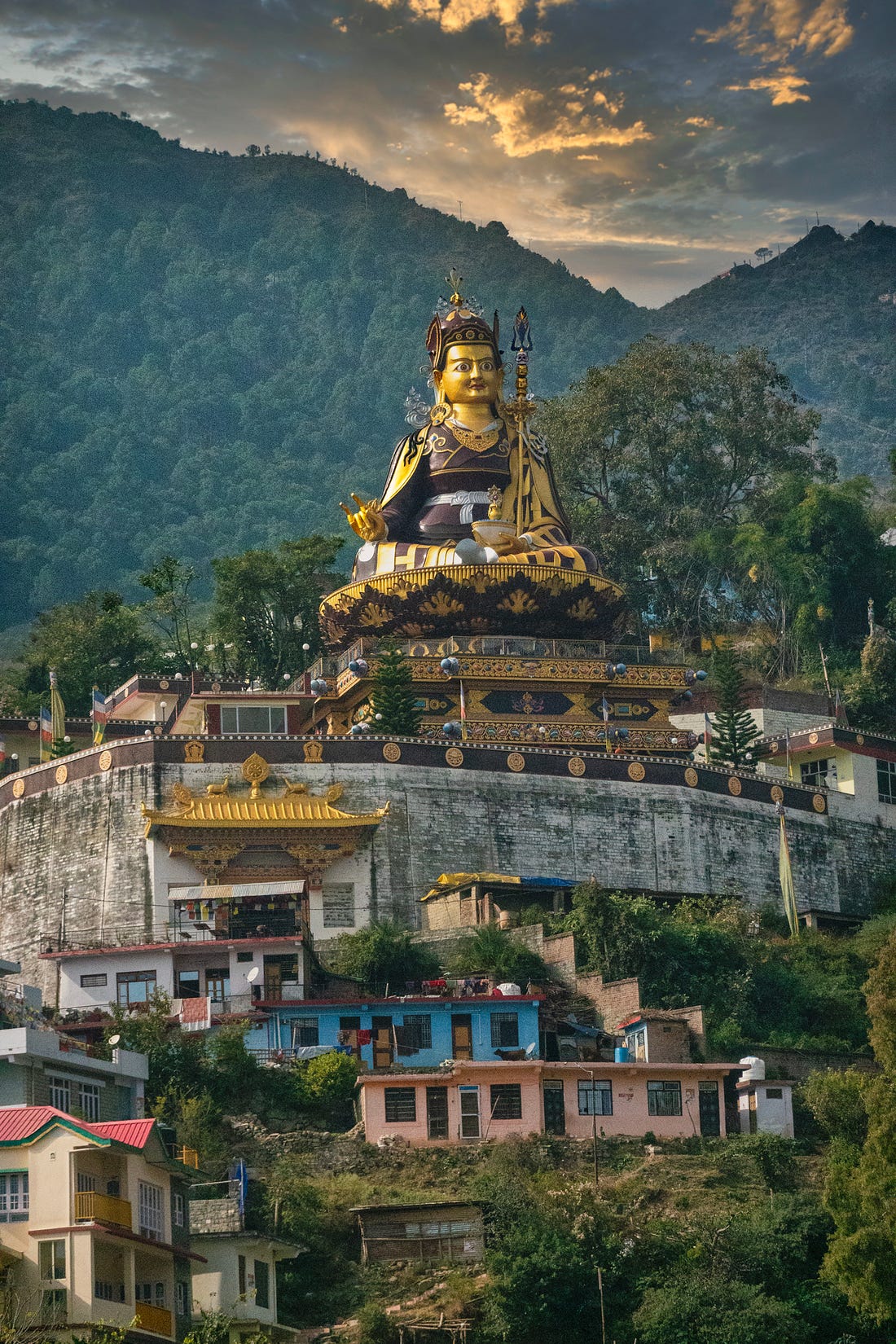
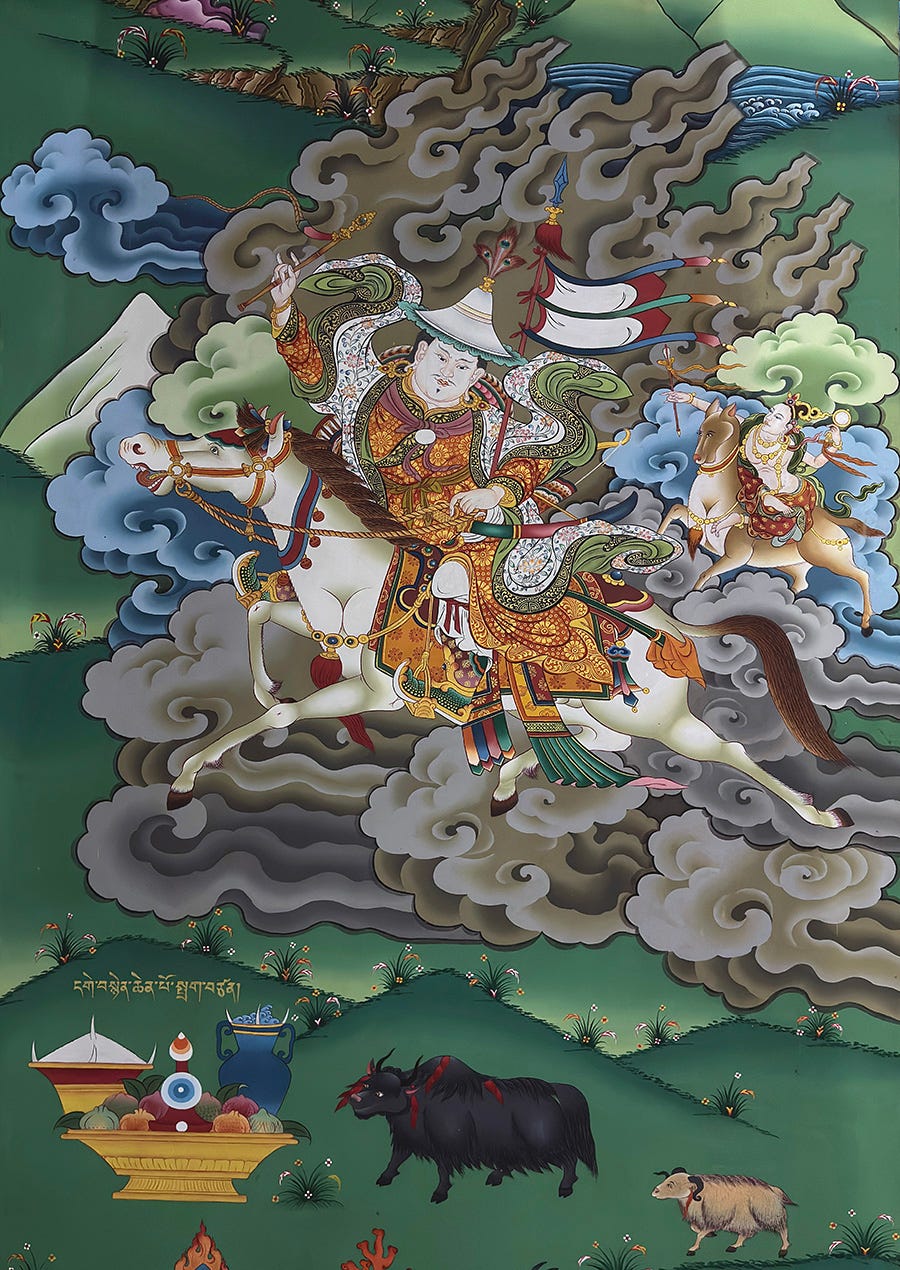
That statue is extraordinary. Built by master artisans from Bhutan and Nepal, it stands 123 feet tall and is said to be filled with sacred relics of Guru Rinpoche. Standing there, you get a panoramic view of the entire valley. Before the entrance, one wall is painted with a large mural of a warrior figure elaborately dressed in ornate silk robes, mounted on a white steed, riding through storm clouds with a consort beside him and a yak grazing below. I took him for Gesar of Ling, which seemed natural enough given where we were — Gesar is considered an emanation of Guru Rinpoche himself. It was only later that a fellow practitioner set me straight: Gesar’s horse Kyang Go Karkar is chestnut, not white, and the Tibetan script identified the figure as a draktsen, a mountain spirit and protective deity.
Before leaving Tso Pema, we stopped at the stupa dedicated to Chögyam Trungpa Rinpoche, my first teacher. We circumambulated the stupa and made a few aspirations before returning to our hotel. Tso Pema is a place I hope to visit again in this life. The next morning, we continued our pilgrimage to the sacred sites in the footsteps of Buddha.